
summit
Global Philanthropy for Local Resilience: A New Paradigm
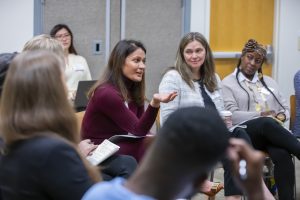
On March 11, Stanford PACS convened a group of philanthropy leaders and ecosystem builders to examine the structural, financial, and ethical questions shaping the future of global aid. The discussion revealed a sector in transition, confronting declining public funding alongside rising global needs, and increasingly recognizing that traditional models of aid and philanthropy are insufficient for the complexity of today’s challenges.
A Sector in Transition
Across formal sessions and informal exchanges, a clear throughline emerged: the need to move from externally driven, programmatic interventions toward locally grounded, system-oriented approaches that build long-term resilience.
A central insight across discussions was that impact is increasingly tied not just to the volume of funding, but to how it is structured and deployed. There is a growing shift away from discrete programmatic funding toward investments in the underlying systems that enable delivery and scale, particularly infrastructure, workforce capacity, and supply chains.
This shift seems particularly urgent in sectors like maternal and newborn health, where progress is stalling and, in some cases, reversing due to declining donor support. Participants emphasized that resilient outcomes require resilient systems, not just well-funded interventions. The most effective models extend beyond funding to incorporate market linkages (e.g., access to livestock, crops, or supply chains), social infrastructure (e.g., peer networks, community-based support), ongoing capacity-building, and engagement. Programs that embed these elements, such as women’s empowerment models with “pay-it-forward” dynamics, demonstrate longer-lasting and compounding impacts, including leadership development and community-level resilience over time.
Re-centering Systems and Local Leadership
A second major theme was the re-centering of local actors as primary agents of change. This reflects both a normative shift toward equity and trust and a practical recognition that locally rooted actors are often more effective and adaptive. This transition entails moving from “aid” to partnership models, recognizing and elevating local expertise and leadership, reducing fragmentation across organizations and funders, and investing in local convenings and knowledge ecosystems. At its most ambitious, this shift points toward self-determination where communities are not perpetually dependent on external philanthropic capital, but are able to shape and sustain their own development trajectories.
However, participants acknowledged a persistent trust and power asymmetry between global funders and local organizations. Addressing this demands changes in governance, institutional culture, and decision-making authority. Organizational design emerged as a critical lever in achieving this: flatter structures, greater proximity between funders and grantees, investment in local staff, and support for locally rooted research capacity can all help translate intent into practice.
A recurring tension surfaced around the mismatch between expectations for rapid results and the realities of long-term social change. Participants noted that some interventions (e.g., nutrition) can yield near-term outcomes while others (e.g., climate innovation) require decades. In response, leading funders are adopting portfolio approaches, balancing short-term, measurable outcomes with longer-term, transformative bets. This reflects a more mature understanding of philanthropy as risk capital operating across time horizons, rather than simply a mechanism for immediate returns.
Reimagining the Future of Global Aid
With government funding, particularly from the U.S. and U.K., in decline, philanthropy is increasingly being called upon to fill structural gaps. However, the consensus was that philanthropy cannot, and should not, simply replace government. Instead, its role is to act as a catalytic actor rather than a primary service provider, one that acts as an enabler of new models and systems that can ultimately scale beyond philanthropic support.
Another important shift discussed was the move from scarcity-driven behavior toward collaborative ecosystem building. Participants emphasized that money alone is insufficient. Effective philanthropy requires trust, humility, and a willingness to cede control to those closest to the work. This requires a reorientation of philanthropy’s underlying mindset, from ownership and attribution toward partnership and collective impact.
Finally, the conversation turned to the challenge of mobilizing new wealth, particularly from entrepreneurs and technologists. Framing philanthropy in terms of return on impact, connecting giving to donors’ domain expertise (e.g., AI, technology), and emphasizing personal fulfillment and long-term legacy can be useful levers. At the same time, this raises deeper challenges about how new philanthropic actors accustomed to the speed and determinism of technology must adapt to the fundamentally different logics of social change, including longer timelines, contextual complexity, and the limits of technical solutions.
Taken together, these discussions point to an emerging paradigm in global philanthropy which requires not just new tools, but a reorientation of power, expectations, and institutional design—with philanthropy playing a catalytic role in enabling locally rooted, system-level change in an increasingly fragmented and resource-constrained global landscape.
We are grateful to Katherine Casey, Don Gips, Isabelle Hau, Shaheen Kassim-Lakha, Kedar Mankad, Kim Meredith, Mary Obelnicki, Craig Silverstein, and Kim Starkey for their expertise and insights.
Beyond the Summit: Global Philanthropy for Local Resilience was made possible with support from DAFgiving360, Gates Foundation, and Next Legacy.