
person
Marijn Nura Mado
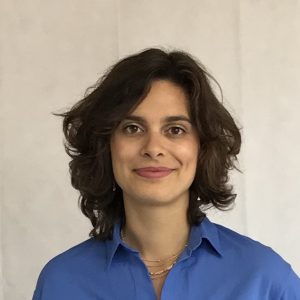
Marijn Mado is a PhD Candidate in Communication at Stanford University. Her research examines media literacy education at scale. She uses ethnographic methods to explore the practices and epistemological assumptions underlying media literacy interventions that span across cultural and linguistic borders.Marijn holds an MA in Sociology from The New School for Social Research and a BA in Liberal Arts & Sciences from the University of Amsterdam.
PACS PhD Fellow Spotlight, August 2025
The Stanford PACS PhD Fellowship Program supports outstanding young scholars at Stanford who are pursuing research that pushes the boundaries of knowledge in philanthropy, social impact, democracy, digital society, and beyond. Each year, we welcome a cohort of students from diverse disciplines, providing them with funding, mentorship, and an intellectual community where they can refine their research and contribute to critical conversations. Through this monthly series, we highlight the incredible work of our PhD Fellows—sharing their insights, research journeys, and the impact they hope to make.
This month, we caught up with Marijn Nura Mado, a 2023–24 Stanford PACS PhD Fellow alum in Communication at Stanford, whose research examines how media literacy campaigns respond to online misinformation. Her work traces the Cold War origins of “psychological inoculation” theory and explores how it is deployed today by media platforms and philanthropic organizations across contexts ranging from Central Eastern Europe to North Africa. By analyzing both the promises and pitfalls of these interventions, Marijn’s research reimagines the relationship between misinformation, democracy, and the public sphere, offering new insights for scholars and practitioners working to strengthen civil society.
Could you tell us about your research project and what motivated you to pursue this research topic?
My research analyzes media literacy campaigns that respond to the spread of online misinformation. I’ve become particularly interested in “psychological inoculation,” a media literacy tool that aims to build cognitive resistance to persuasion by forewarning audiences of manipulative messages—analogous to medical immunization. In my research, I trace the fascinating Cold War history of psychological inoculation theory, as well as conduct ethnographic work with media platforms and philanthropic organizations that employ inoculation campaigns in several contexts, ranging from Central Eastern Europe to North Africa. I investigate the motivations and implications of employing the inoculation approach for “safeguarding” our contemporary democracies.
I’m broadly interested in how to build solidarity and tolerance between different social groups, particularly after violent conflict. What processes can turn intergroup resentment into mutual understanding? This question led me to explore history and civil education as a peacebuilding tool, until I ultimately landed on media literacy education as prevention for extremism during my PhD. As both a fan and a critic of media literacy interventions, I committed myself to ethnographically studying their promises and pitfalls.
How does your research help address real-world challenges related to civil society or philanthropy and contribute to advancements in your field?
How to fix the “misinformation crisis” is a million dollar question in the field of communication and civil society. The tension between free speech and policing harmful or inaccurate content is keeping scholars, governmental organizations, and the philanthropic branches of media platforms up at night. My research draws out the implications of the media literacy solutions that these actors choose to implement. I particularly question what vision of well-functioning democracy is supported by these solutions, and which avenues are foreclosed. In this way, my work critiques the highly rational image of the public sphere underlying many of these solutions, and redirects our attention to how affective belonging, historical relations, and social inequality shape democratic participation. Ultimately, my research aims to reimagine the relation between misinformation, the public sphere, and democracy, which will inform both media literacy scholars and practitioners.
What is one unique or important thing you want others to know about your research?
One of the key findings of my research that intrigues me is the overwhelming concern with appearing politically neutral. Many of the media literacy educators I speak to—at media platforms and governmental or philanthropic organizations—emphasize that their anti-misinformation approaches are “apolitical.” I understand this tendency, because they try to find solutions that work for everyone across the political spectrum. However, both their anti-misinformation interventions as well as the inaccurate narratives they seek to counter, tend to be steeped in socio-political values. My research shows that their strategies to de-politicize misinformation lack transparency and can easily backfire.
If you weren’t in graduate school, what would you be doing?
My annoying trait is that I love to explain things to audiences, so if I can’t be pestering undergraduate students in class, I would find another group of willing subjects. Probably, I would combine this with my love for water sports and become a scuba or surf instructor! But since I’m not very good at either, I think we can be happy I’m teaching media theory instead.