
PACS Blog / August 11, 2025
Education for Philanthropy Professionals: Q&A with Eric Weingartner on Leadership, Learning, and Philanthropy
We spoke with Eric Weingartner, President of the Overbrook Foundation, about his approach to leadership, how philanthropy can better connect intention to impact, and why getting closer to the work matters.
As part of the Education for Philanthropy Professionals (EPP) program at the Stanford Center on Philanthropy and Civil Society (PACS), we had the pleasure of hearing from Eric Weingartner, President of the Overbrook Foundation, and someone who’s spent years navigating the intersections of the nonprofit, public, and philanthropic sectors. From exploring the tension points between philanthropy, nonprofit operations, and government, to encouraging practitioners to sharpen their own philosophies of giving, Eric brought both strategy and storytelling to the conversation. We caught up with Eric after his session to dig deeper into his perspective on leadership, learning, and what philanthropy really needs right now.
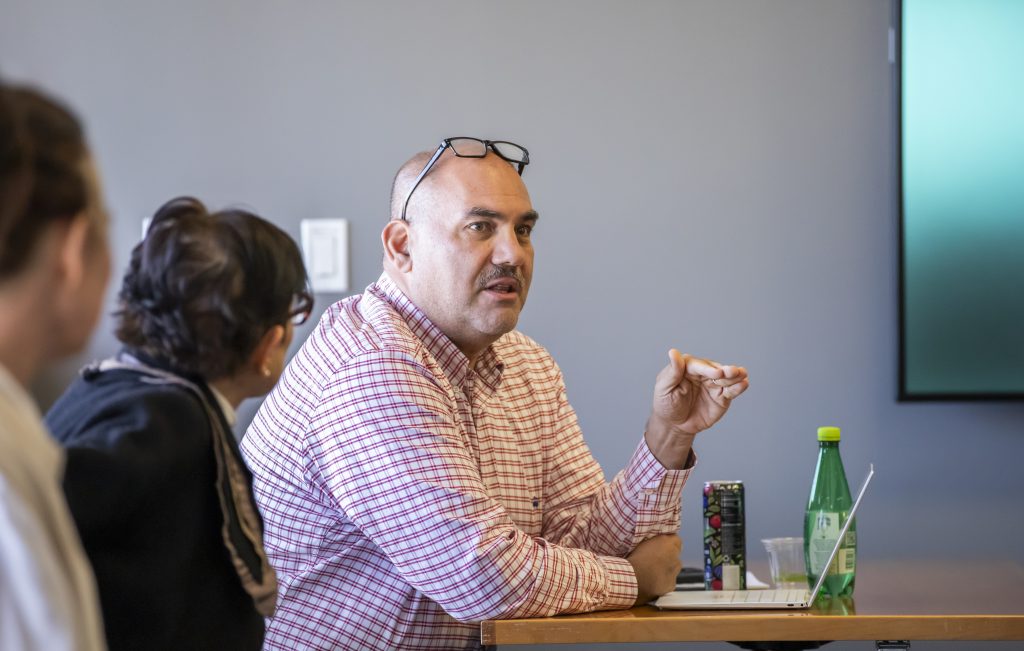
Education for Philanthropy Professionals (EPP), April 2025.
What do you hope attendees took away from your session and what do you hope they do with it?
I wanted to give folks some tactical grounding, some history and real-life context. I also wanted to be transparent about how I got here, my career path, why I got into this work, how I think about the sector, and why I lead the way I do. Philanthropy doesn’t operate in a vacuum. It lives at the intersection of nonprofit work, government systems, and private capital. These are very different operational worlds, and understanding how they interact is crucial to doing philanthropy well. Philanthropic dollars are precious, and how you allocate them should reflect both your goals and a solid grasp of who and what you’re investing in.
That said, I don’t expect anyone to adopt my exact approach. If participants walked away with pieces of it, some rationale and tactics that they can adapt to their own context, then I’ve done my job.
Why do you think programs like EPP are essential right now?
Because the world is often on fire, and yet we have massive amounts of philanthropic capital sitting on the sidelines, or moving fast without clarity on how to measure real impact. Programs like EPP help connect intention to execution. When people understand what it means to deploy dollars well and see the ROI, they’re more likely to keep doing it and do it better.
One of the things I really appreciated about EPP was the diversity of philanthropic approaches in the room. Speakers like Rob Reich, who pushed my thinking, and attendees who were smart and curious enough to take in multiple perspectives and still make their own decisions.
What makes this format (executive-style, hybrid, intimate) particularly effective?
Intimate settings allow for real dialogue, which is rare in this sector. But I’d push for more. Site visits at night? Great idea. Let’s use every hour we’ve got. Optional nonprofit visits? Even better. The more we can embed these experiences in reality outside the classroom, on the ground, the better prepared people will be to lead with clarity and purpose. If you’re going to gather smart people, push them to see as much as they can. Getting proximate to the work helps you think differently when you return to your role.
Any final thoughts you’d like to share?
I encourage more executive directors, nonprofit operators, even people in government to participate in EPP as guest speakers. Hearing directly from those managing programs and navigating day-to-day realities makes the dialogue richer. The relationship between funders and grantees should be more central to these conversations. There’s real value in understanding how nonprofit infrastructure works and how boards, operations, and evaluation are handled in partnership with philanthropy.
I believe this sector can be stronger, and I believe I have something worth contributing. My hope is that others do too. Programs like EPP are a great step, especially when they center curiosity, invite new voices, and challenge the field to do better, not just more.